The Integrative Biometeorology Lab
Combining Micrometeorology, Ecology and Biogeochemistry.
Welcome to the Integrative Biometeorology Lab at NC State
We are a research laboratory at North Carolina State University. We study land-atmosphere interactions seeking to push discoveries in understudied biological processes and in parallel, improve Atmospheric and Earth System Models. Please see our core research areas below.
Land cover composition and associated surface heat fluxes have a strong influence on the development of the planetary boundary layer (PBL), which extends from the surface to an elevation of ~1-2 km. The height of the PBL drives the dilution of contaminants and other trace gases at the Earth’s surface and affects the temperature and humidity we experience. Our team investigates to what extent biophysical processes drive the height of the PBL and how we can use this information to produce better predictions of air quality, extreme temperature, and water stress, among others.
Methane Fluxes and Wetland Biogeochemistry
Wetlands offer multiple ecosystem services, including habitat for flora and fauna, improvement of water quality, and carbon sequestration. However, wetlands can also emit large amounts of methane and the processes by which this methane is emitted to the atmosphere remain understudied. Understanding how much carbon these wetlands sequester and the main environmental and biological drivers of methane emissions will allow us to create more accurate models and better predict how these ecosystems will react to climate change.
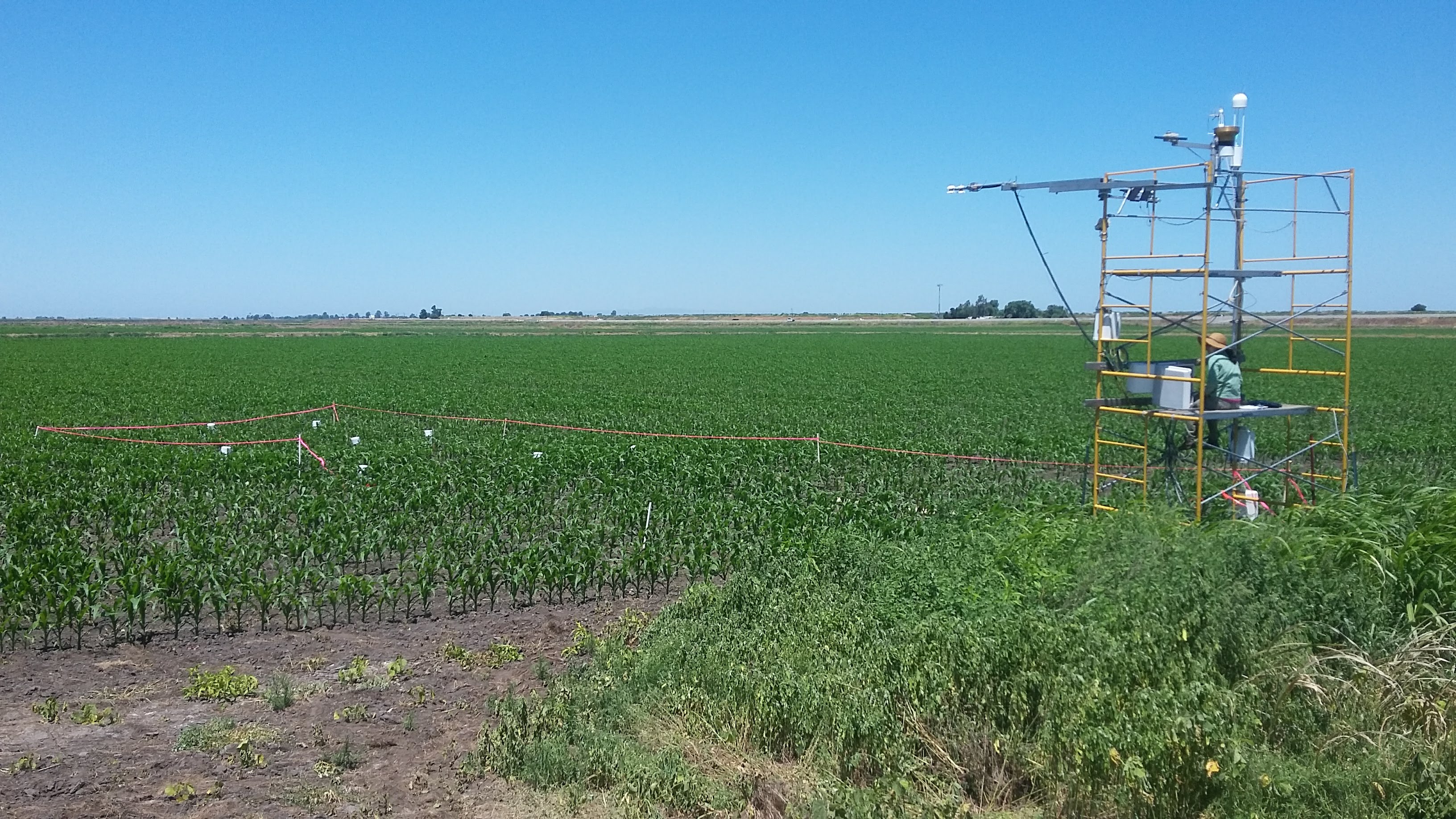
Many agricultural lands are located in water-scarce areas where optimizing water use is a necessity. Our goal is to improve estimates of evaporation from different crops and natural systems to aid water management decisions. Using the eddy-covariance technique, we can measure water exchange at a desired location and use this information to validate current models built with remotely sensed and reanalysis data.
 Integrative Biometeorology